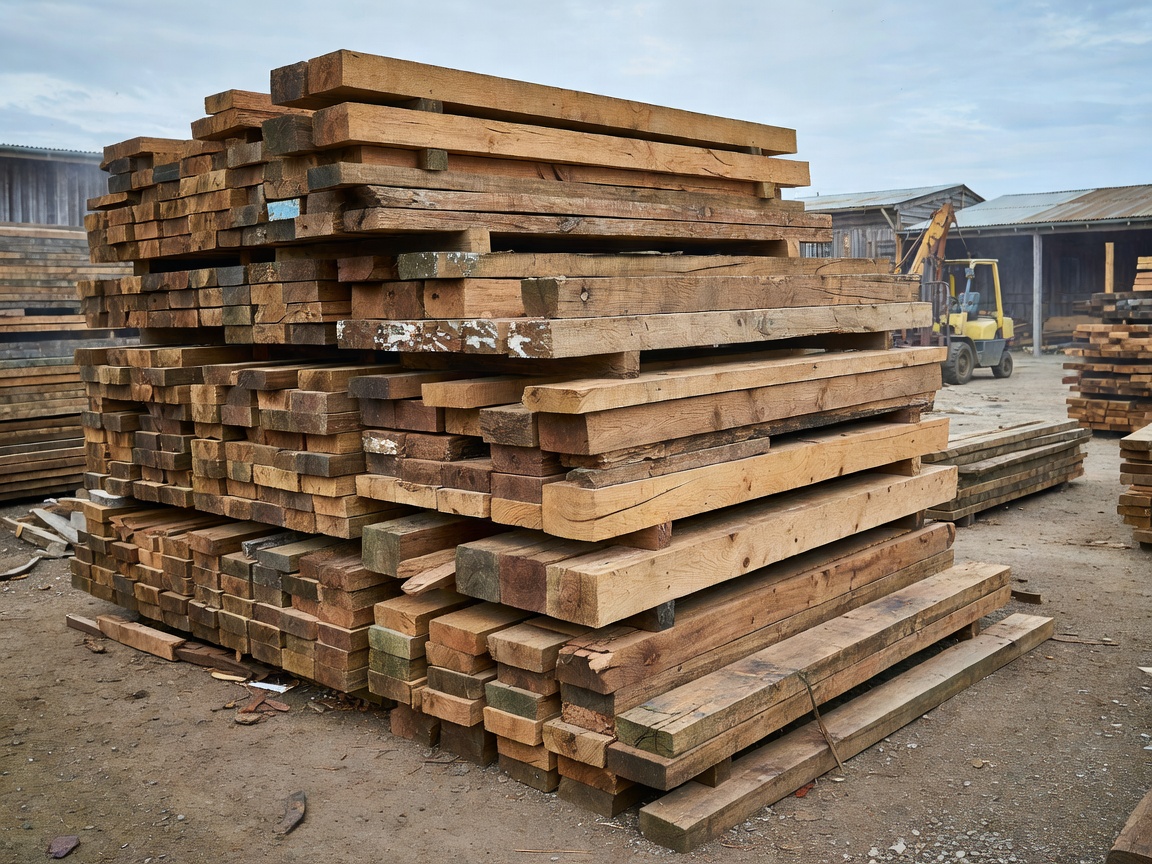
1. Fiber Density and Natural Aging
Reclaimed timber salvaged from 18th and 19th-century agricultural barns typically originates from old-growth virgin forests. These trees grew slowly under dense canopy shade, resulting in tight annual growth rings (often 20–30 rings per inch compared to 6–10 in contemporary plantation timber).
2. Equilibrium Moisture Content (EMC) Stability
Because antique timber has undergone decades of seasonal relative humidity fluctuations, internal cell wall bound water has completely evacuated, and hemicellulose has partially degraded. Consequently, reclaimed oak exhibits significantly lower movement coefficients (volumetric expansion/contraction) when installed in climate-controlled indoor environments.
3. FSC Certification and Forest Lifecycle
Forest Stewardship Council (FSC) certification guarantees that virgin timber harvesting follows strict environmental parameters:
- Selective harvesting systems preserving canopy biodiversity.
- Protection of riparian buffers along natural waterways.
- Mandatory replanting ratios maintaining long-term carbon sink balance.
4. Comparative Summary Matrix
When specifying timber for high-end architectural joinery or bespoke furniture, consider these key comparative factors:
- Workability & Tool Wear: Reclaimed oak frequently contains embedded mineral deposits, grit, and hidden iron fasteners which accelerate edge wear on jointer knives. FSC timber offers uniform grain without metal inclusions.
- Carbon Footprint: Reclaimed lumber avoids felling and drying emissions, making it carbon-negative when sourced within a 300-mile regional radius.