1. The Chemistry of Polymerizing Oils
Unlike film-forming polyurethane finishes that rest on top of timber like a plastic coating, penetrating oils absorb deep into the wood's vascular lumen. Pure Tung Oil (derived from the seeds of Vernicia fordii) contains high concentrations of eleostearic acid (an unsaturated fatty acid with conjugated triple bonds).
Upon exposure to atmospheric oxygen, tung oil undergoes an exothermic polymerization reaction, transforming from a liquid lipid into a flexible, hydrophobic solid matrix embedded directly inside the wood pores.
2. Pure Tung Oil vs. Commercial Hardwax Oils
While pure tung oil requires 5 to 7 thinned coats with 24-hour cure times between applications, modern Hardwax Oils combine vegetable oils (sunflower, linseed) with natural carnauba and candelilla waxes to accelerate cross-linking:
- Pure Tung Oil: Non-yellowing, 100% food-safe, extreme water resistance, but demands patience during application.
- Hardwax Oil: Dries in 8–12 hours, creates an elastic micro-porous surface that allows timber to breathe without peeling or cracking.
3. Application Protocol for Optimal Matte Luster
- Sand timber progressively up to 180 or 220 grit. Avoid over-sanding with ultra-fine grits, which burnish the fibers and block oil absorption.
- Vacuum dust thoroughly and wipe down with isopropyl alcohol or a damp tack cloth.
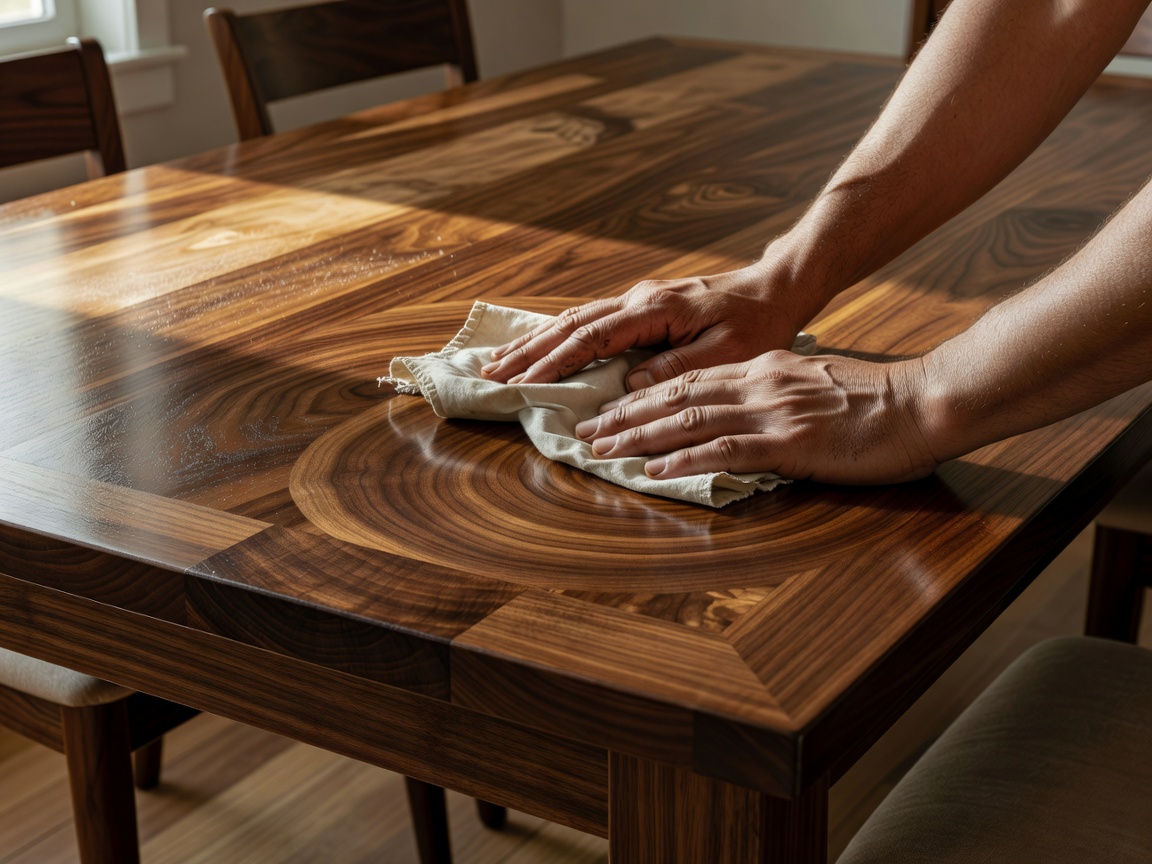
- Apply the first coat liberally, allowing 30 minutes for cellular absorption before wiping off 100% of excess surface oil.
- Allow 24 hours of warm ventilation for oxidation polymerizing to occur before buffing with a 0000 white abrasive pad.